Door Sticking or Won’t Latch? How to Find the Cause
A door sticking at the top corner, rubbing on the floor, or swinging shut without catching the latch is one of the most common small problems in a house. It’s also one of the most commonly made worse, because the first instinct is to grab a plane and take wood off. Most of the time the door isn’t too big. Something has moved, and the door is just where you notice it.
Start by finding where it rubs
Close the door and look at the gap around it. On a door that hangs right, the gap is even all the way around: top, latch side, and hinge side.
- Look for a gap that’s tight at one corner and wide at the opposite one. That pattern tells you the door is tilting.
- Slide a sheet of paper around the edge of the closed door. Where it pinches is where it rubs.
- Look for shiny, worn paint on the edge of the door or the inside of the frame. That’s the contact point.
Once you know where it rubs, the cause is usually one of four things.
Cause 1: loose hinge screws
This is the most common cause, and the easiest fix. When the screws in the top hinge loosen, the top of the door drops toward the latch side. The result is a door sticking at the top corner on the latch side, and often a latch that no longer lines up.
The check: open the door partway, grab the handle, and gently lift. If you see the hinge shift or hear a click at the top hinge, the screws are loose.
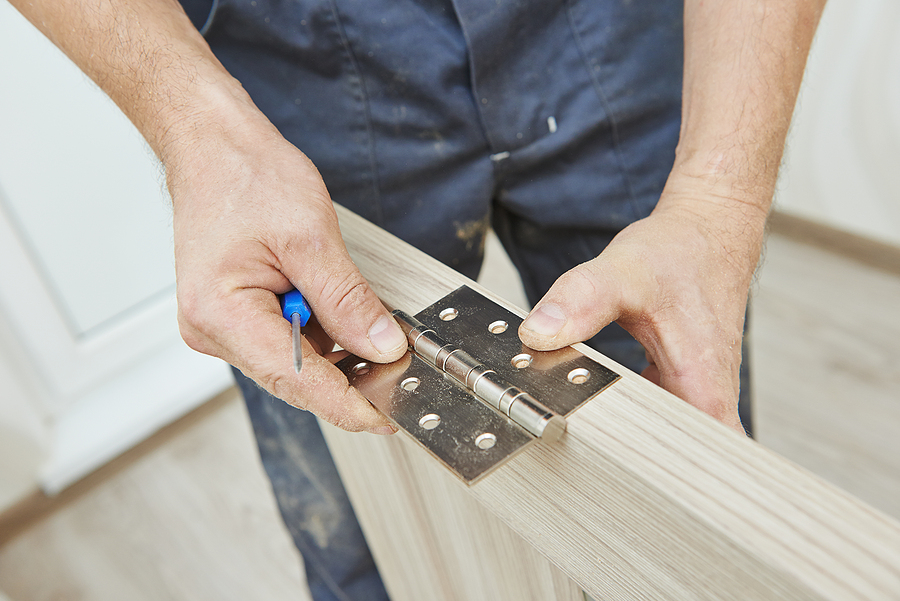
The fix: tighten them. If a screw just spins, the hole is stripped. The usual fix is to replace one screw in the top hinge with a longer one that reaches through the jamb into the framing behind it. That pulls the whole door back up into place and holds it there.
Cause 2: humidity
Wood takes on moisture in a humid summer and gives it up when the heat is on in winter. A door that sticks in August and swings freely in January is reacting to the weather.
The usual reason is bare wood. The top and bottom edges of a door are often never painted, because nobody sees them, and those raw edges soak up moisture. If the sticking is seasonal and mild, sealing or painting all the edges can be enough to stop it.
If the door really does need trimming, do it in the dry season. A door planed down in the middle of a humid spell will have a visible gap once winter comes. And any edge that gets planed has to be sealed again afterward, or it goes right back to absorbing water.
Cause 3: paint buildup
If the door or its frame was painted and the sticking started right after, the problem is probably just thickness. Several coats on the edge of the door and on the stops add up. The fix is to scrape and sand the built-up paint where it’s rubbing, not to cut the door.
If your house was built before 1978, have the paint tested for lead before anyone sands or scrapes it. Lead dust from old paint is a real hazard, especially for children, and a cheap test kit or a lab test settles the question first. That goes for planing an old painted door edge too.
Cause 4: the house moved
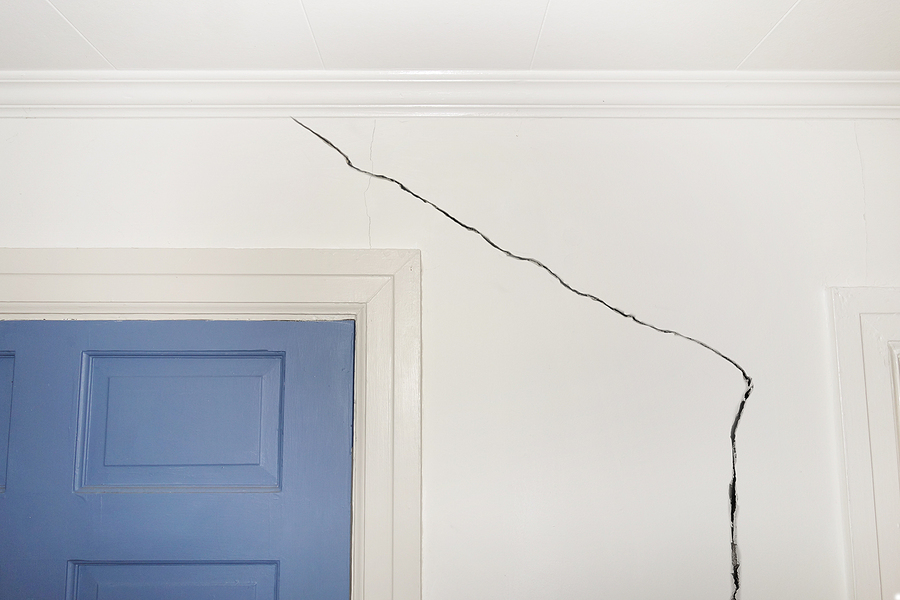
If several doors start sticking around the same time, or a door that’s been fine for years suddenly isn’t, look at the walls nearby. New cracks running from the corners of the door frame, together with a door that’s out of square, point to movement in the framing. Our guide to drywall cracks and when to worry shows what to look for.
Often this turns out to be seasonal movement. But if a door frame is racking out of square quickly, or you see it alongside a sagging ceiling, stop and get a structural assessment before anyone works on the door.
When the door won’t latch
A door that closes but won’t catch has a latch that isn’t meeting the hole in the strike plate (the metal plate on the frame).
- Find where it’s hitting. Rub a little lipstick or chalk on the latch, close the door, and look at the mark it leaves on the strike plate. A mark above or below the hole tells you which way it’s off.
- If it’s off by a lot, the door has probably sagged. Fix the hinges first, as above, and the latch often lines up again on its own.
- If it’s off by a little, the strike plate can be moved, or its opening filed slightly larger.
- On an exterior door, new weatherstripping that’s thicker than the old can hold the door away from the frame so the latch can’t reach. Check that before adjusting anything else.
What not to do
Don’t plane the door before you’ve checked the hinges. A sagging door that gets cut to fit will have an uneven gap forever, and once the hinges are tightened later, it’s too small. On an exterior door, that gap is a draft for every winter after.
When to call
Doors and trim are on Jeff’s list of services, from adjusting a door that’s sagged to replacing one that’s past saving, inside or out. If you’ve checked the hinges and the door still won’t behave, call or text Jeff and tell him what it’s doing. You’ll hear back the same day or within 24 hours, and Jeff prices the job once he has seen it.