Drywall Cracks: Which Ones Are Normal and When to Worry
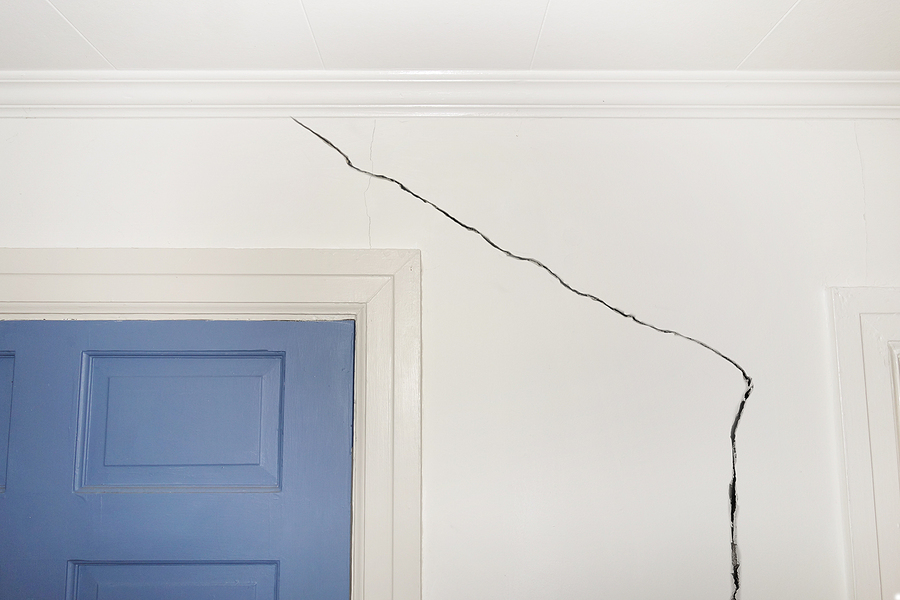
You notice a thin line running up from the corner of a doorway, or a row of small round bumps across the ceiling. Most drywall cracks are cosmetic. A few are the house telling you something. The shape of the crack, where it sits, and whether it changes over time are what tell the two apart.
Why drywall cracks in the first place
Drywall is sheets of gypsum board screwed or nailed to wood framing, with the seams covered in paper tape and joint compound. Wood moves. It swells in a humid summer and shrinks when the heat comes on and dries the air in winter. A newer house also settles as its framing dries out over the first few years.
The drywall doesn’t move with it. So the stress shows up where it concentrates: at the seams between sheets, in the corners, and at the corners of door and window openings, where a big hole has been cut out of the wall.
Cracks that are usually cosmetic
These are worth fixing for looks, but they’re not a sign of a problem with the house:
- A hairline crack running at an angle from the corner of a door or window. This is the most common one. The opening is the weak spot, so that’s where the wall gives.
- A straight crack along a seam, or tape that’s bubbling or lifting. Usually the tape wasn’t bedded in enough compound when the wall was finished, and seasonal movement has worked it loose.
- Nail pops. Small round bumps or circles, often in a neat row on a ceiling or wall. A fastener has backed out a little as the framing behind it dried and shrank.
- A crack in an inside corner, where two walls meet or the wall meets the ceiling.
One thing to know about all of these: a crack that comes back after it was patched usually means it was covered rather than repaired. Smearing compound over a moving joint fills it for a season. A lasting repair reinforces it with tape.
Cracks worth a closer look
These don’t automatically mean something serious, but they’re the ones to watch and not just paint over:
- A crack wide enough to fit the edge of a coin, rather than a hairline.
- A crack that’s getting longer or wider over weeks, not just appearing and staying put.
- Cracks that show up at the same time doors start sticking or stop latching. Two symptoms at once point to movement in the framing. Our guide to a door sticking at the top or not latching covers that side of it.
- Jagged cracks, or several cracks in the same area.
- A crack with a brown or yellow stain, or drywall that feels soft or damp. That’s water, and the crack is the least of it.
Two stopping points. If a ceiling is sagging, or a crack is opening fast while a nearby door frame is going out of square, stop and get a structural assessment before anyone patches anything. And if there’s a water stain, the leak gets found and fixed first. Patching over a wet spot only hides where the water is going.
How to track a crack
If you’re not sure whether a crack is moving, measure it instead of guessing:
- Make a small pencil mark at each end of the crack and write the date next to it.
- Take a photo with a coin or a ruler held against the crack, so you can compare the width later.
- Check it once a month. Note the season too, since a lot of cracks open in winter and close again in summer.
A crack that hasn’t moved past your marks in a few months is most likely cosmetic. One that has is worth having someone look at.
What a proper repair looks like
A good drywall repair starts with the cause, not the compound. Once you know the crack is cosmetic, or the cause behind it has been dealt with, the repair goes like this:
- Cut away any loose tape and crumbling compound so the repair starts on something solid.
- Re-tape the joint, or reset popped fasteners with new screws just beside them.
- Apply joint compound in several thin coats, feathering each one wider than the last.
- Sand smooth, prime, and paint.
If your house was built before 1978, have the paint tested for lead before anyone sands or scrapes it. Lead dust from old paint is a real hazard, especially for children, and a cheap test kit or a lab test settles the question first.
That last step matters more than people expect. Bare compound absorbs paint differently from the rest of the wall, so a patch painted without primer shows up as a dull square in certain light. Priming, and often repainting the whole wall section, is what makes the repair disappear.
For drywall damaged by water, the wet section gets cut out and replaced, once the leak is found and fixed.
When to call
Wall and drywall repair is one of Jeff’s specialties, along with the painting that finishes it. If you’re looking at a crack and not sure which kind it is, don’t panic. Call or text Jeff and describe it. A photo with a coin next to the crack helps. You’ll hear back the same day or within 24 hours, and Jeff prices the job after he has seen it, anywhere in Hunterdon, Somerset and Mercer counties. If your question isn’t about cracks at all, our Handyman FAQs may already answer it.