How to Do a Sump Pump Test Before the Next Big Rain
Many homeowners find out whether their sump pump works at the worst possible moment: during a heavy rain or a spring thaw, with water already on the basement floor. A sump pump test takes a few minutes and a bucket of water. Doing one now, and again in early spring, is one of the easiest ways to protect a basement.
What the sump pump actually does
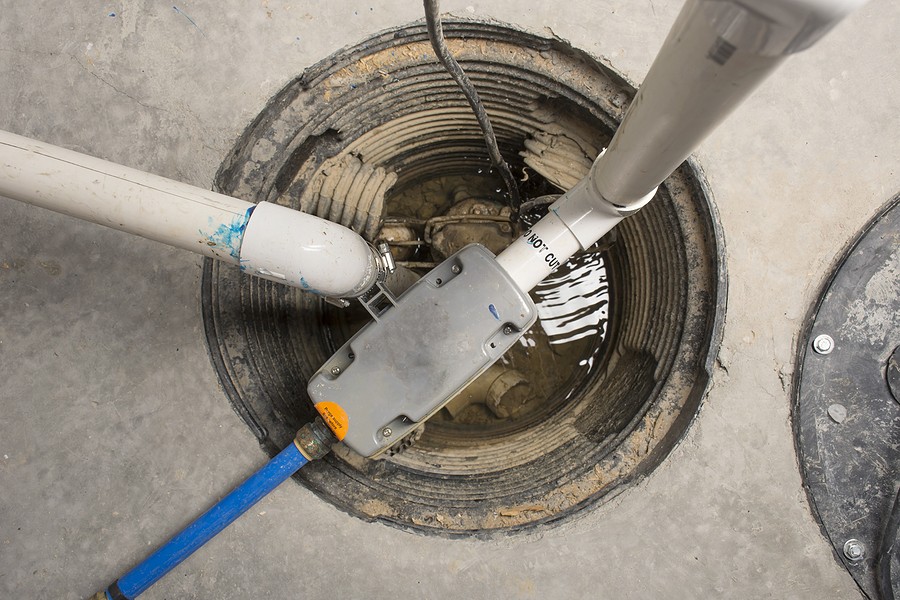
The sump pit is the basin set into the lowest floor of the house, usually in a corner of the basement. Groundwater that collects around the foundation drains into it. Inside the pit, the pump sits with a float attached. When the water rises, the float lifts and switches the pump on. The pump pushes the water up through the discharge pipe and out of the house, then shuts off when the float drops again.
There’s usually a check valve on the discharge pipe, a one-way valve that keeps the water in the pipe from falling back into the pit each time the pump stops.
Every one of those parts can fail quietly: the float, the pump, the check valve, and the pipe outside. A test checks all of them at once.
How to do a sump pump test
- Look before you touch anything. The pump should be plugged in, the cord shouldn’t be cracked or chewed, and the pit shouldn’t be full of debris. Never reach into the pit while the pump is plugged in.
- Pour water in slowly. Use a bucket and pour into the pit until the water lifts the float. A full bucket is usually enough.
- Watch the pump start on its own. It should switch on when the float rises, pull the water level down, and switch off when the float drops.
- Go outside and find the end of the discharge pipe. Water should be coming out, and it should be flowing away from the foundation, not pooling next to the house where it can find its way right back into the pit.
- Listen. A steady hum is normal. Grinding, rattling, or a pump that keeps running after the pit is empty are not.
Some pumps have a test button, or a plug-in float switch with its own procedure. If yours does, the manual for that model explains how to use it. The bucket test still checks the whole system, including the pipe outside.
Signs something is wrong
- The pump doesn’t start. First confirm the outlet has power, for example by plugging in a lamp; a tripped breaker or GFCI outlet is a common cause. Then check the float, which may be stuck against the side of the pit or tangled with the cord. If it has power, the float moves freely, and the pump still won’t run, the pump may have failed.
- The pump runs but the water doesn’t go down. The intake may be clogged, or the discharge pipe may be blocked or frozen.
- The water rushes back into the pit after the pump stops. That usually points to a check valve that’s failing.
- The pump runs or cycles every few minutes in dry weather. Something isn’t right with the float setting or the check valve, or a lot of groundwater is coming in. Either way, worth a closer look.
- The pump is old and you don’t know how old. Look for a date on the label. A pump that’s been in the pit since before you bought the house is worth keeping an eye on.
Before winter
Two things matter once the temperature drops:
- Keep the discharge line clear. The end of the pipe outside can get buried in leaves, then snow, and a line holding standing water can freeze. Clear the end of the pipe, and remove any loose extension hose that holds water once freezing weather arrives, so the pump isn’t pushing against ice.
- Don’t unplug the pump for the winter. Groundwater still rises during a midwinter thaw or a heavy rain on frozen ground. A pump that’s switched off can’t help when that happens.
A safety stopping point. If water is already standing on the basement floor and it’s anywhere near something plugged in, stay out of the water. Call your power company or an electrician to make it safe first.
When to call
Sump pumps are on Jeff’s list of services. If your pump failed the test, made a noise you didn’t like, or is simply old enough that you’d rather not find out the hard way, call or text Jeff and tell him what you saw. You’ll hear back the same day or within 24 hours. If the water is already coming in, emergency service is available, and an additional service fee applies. The fee depends on the hour and the job, so ask when you call. Our Handyman FAQs answer the other questions people usually ask first.